 VideoAmericanGuru
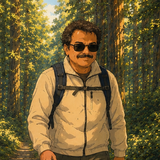
LA's secret is that it's a mountain town wearing a city costume. The Santa Monica Mountains run straight through it, a 4,300 acre park sits above Hollywood, and the beach has a bike path longer than most rail trails. Skip the freeway clichés: done on foot and trail, Los Angeles is legitimately one of the best outdoor cities in the country.

Know before you go
- Location
- Southern California; 5.5-6 hrs from the Bay Area on Interstate 5
- Best seasons
- Oct-May is prime hiking; summer works at the coast, bakes inland
- Signature sights
- Griffith Observatory, Hollywood Sign trails, Runyon Canyon, the beach path, Getty views
- Traffic rule
- Plan one area per half day and never cross town at 5 p.m. This is law
- Dogs
- Very good: Runyon Canyon is famously off leash; most trails welcome leashes
- Smog note
- Winter and post rain days serve the hundred mile views
Griffith Park: the giant above the city
One of the largest urban parks in America hangs directly over Hollywood, and it's the anchor of any outdoor LA day. Start at the Griffith Observatory (free, magnificent, best at sunset when the city grid ignites), then pick your trail: the West Observatory Trail for an easy leg stretch with skyline views, or the real prize, the hike to the Hollywood Sign. The classic route from the Brush Canyon trailhead runs about 6.5 miles round trip to the ridge behind the sign, where the letters spread below you and the whole basin rolls out to the sea. Morning light beats afternoon haze, and shade is scarce; carry real water.
The parking is the thing nobody warns you about. The lots at the Observatory are small and fill by late morning on any decent weekend, and the road up is a single lane in each direction with nowhere to turn around, so you queue. The alternatives are far better than they sound: park lower and walk up one of the trails, which takes about half an hour and is a nicer approach anyway, or use the shuttle that runs from the Greek Theatre lot. Either beats forty minutes of crawling uphill.


Inside the Observatory: the free hour most visitors skip
People come up for the view and photograph the building from outside, and a surprising number never go in. Admission has been free since it opened in 1935, which was the founding condition of the whole place, and the interior is the better half.

The rotunda ceiling is the first thing to look at: Hugo Ballin's 1935 murals, all classical figures and constellations, above a Foucault pendulum that has been quietly demonstrating the earth's rotation for ninety years. Most people walk under both without looking up.

Upstairs, the refracting telescope sits under its dome on the roof, and on clear evenings staff open it to the public at no charge. The queue moves slowly and is worth joining; more people have looked through this particular instrument than any other telescope on earth, which is a strange and rather lovely statistic to be part of.

Practical notes: the Observatory is closed Mondays, which catches out more visitors than anything else here. Planetarium shows are the one thing that costs money, and they are worth it. And sunset is genuinely the best hour, but it is also when the parking situation is at its worst, so the walk up becomes the sensible option rather than the virtuous one.
The view, and when you will actually get it
Honest warning, because our own photographs make the point better than a paragraph can. The hundred mile view that sells this place is real, but it is not the default. On a typical warm afternoon the basin sits under haze and the skyline is a pale grey suggestion about six miles out; you can see the shape of the city and very little else.

The clear days are earned by weather, not by timing. The day after rain is the reliable one, and winter generally beats summer. Morning beats afternoon in any season. If you have one evening in LA and the air looks thick, go anyway for the building and the sunset, but do not expect the postcard; it is a particular kind of day rather than a particular hour.

Runyon Canyon: the scene that hikes
Runyon Canyon is LA compressed into one loop: influencers, actual athletes, everyone's dog, and skyline views from the ridge, all in a 2.7 mile circuit rising straight out of Hollywood. It's not wilderness and doesn't pretend to be; it's the city's shared backyard workout, and as people watching plus views per minute, nothing in California beats it. Off leash through most of the canyon, which explains the golden retriever density.
The coast: 22 miles of bike path
The Strand runs from Santa Monica through Venice to Redondo, a paved beachfront path made for cruiser bikes and long runs. The essential stretch: rent bikes in Santa Monica, roll the pier and its 1922 carousel, drift through the Venice Boardwalk circus (drummers, bodybuilders, skate park at full send), and continue as far as legs vote. Ocean on one side the entire way. Two blocks inland from the boardwalk chaos, the Venice Canals are the neighborhood's secret garden: quiet walkways over arched bridges and mirror still water, a leftover dream from 1905 that somehow survived. For a quieter ocean fix, Point Dume in Malibu, 40 minutes up Highway 1, adds a bluff top whale lookout and one of SoCal's prettiest coves.

The canals deserve more than the sentence they usually get. Abbot Kinney dug them in 1905 as the centrepiece of a seaside resort meant to evoke Venice, complete with gondoliers. Most were filled in for roads during the 1920s; what survives is a few blocks of water, arched footbridges and ducks, surrounded by some of the most eccentric residential architecture in the city.

It takes about forty minutes to walk the whole network slowly, and the contrast with the boardwalk two blocks away is the point: you step off a street of drum circles and skate ramps into near silence. Go on a weekday morning if you can. These are people's front gardens rather than a park, so the etiquette is to walk quietly and not photograph through anyone's windows.

Hollywood Boulevard: the honest verdict
Everyone asks, so: the Walk of Fame is worth about twenty minutes and no more. Two and a half thousand brass and terrazzo stars run along a pavement that is otherwise an ordinary, fairly scruffy city street, and the gap between the glamour implied and the reality underfoot is the single most reliable disappointment in Los Angeles.

That said, go once. The Chinese Theatre forecourt with its handprints is genuinely charming and free, the 1920s cinema architecture along the boulevard is better than the souvenir shops beneath it suggest, and it is ten minutes from Griffith Park, so it slots into a morning without costing you a half day.

What we would not do is build a day around it, pay for any of the attractions that line it, or come after dark expecting atmosphere. Do it early, keep it brief, and spend the saved hours on the trails above it.
Views worth the detours
The Getty Center is free (parking fee only) and doubles as a hilltop garden with basin wide views, art included. Baldwin Hills Scenic Overlook earns its panorama with a brutal little stair climb locals treat as a gym. And in the Santa Monica Mountains proper, Solstice Canyon (Malibu) hides a year round creek, ruins of a burned estate, and an easy waterfall walk that feels a hundred miles from the city it isn't.
🐾 Bringing your dog?
LA hikes with dogs better than its reputation: Runyon Canyon is the famous off leash canyon, Griffith Park welcomes leashed dogs on nearly all trails (including the Hollywood Sign routes), and Rosie's Dog Beach in Long Beach is the county's legal off leash surf zone. The beach bike path itself is leashed and busy; early mornings are calmer. Summer heat plus no shade is the standing caution on every inland trail.
More from these days
Griffith Park, the boulevard and the canals, across a couple of visits.


Before you go
Getting there
LA is all about the drive: distances are long and traffic is the defining variable, plan around rush hours (roughly 7-10am and 3-7pm) rather than mileage. Metro Rail covers downtown, Hollywood, and Santa Monica surprisingly well if you'd rather skip parking. Beach traffic peaks summer weekend afternoons.
Live conditions: Google Maps · Caltrans QuickMap
Weather right now
Mild and sunny most of the year, but microclimates are real, the coast runs cooler and grayer (June Gloom) while the valleys bake 15-20°F hotter.
What to pack
- Layers for the coast-to-valley swing
- Comfortable shoes
- Sunscreen
- Patience for traffic
Plan your day
Tell the planner where you're starting from and when, and it builds a timed itinerary from this guide's stops.
Quick answers
Can you really do LA without hating traffic?
Yes, with the one rule: one area per half day. Hollywood/Griffith is one block of time, the coast is another, and the 5 p.m. crosstown drive is never attempted. Break the rule once and you'll respect it forever.
Which Hollywood Sign trail is best?
Brush Canyon for the full hike to the ridge behind the letters; Lake Hollywood Park for the easy classic photo with zero climbing. The sign itself is fenced; nobody touches the letters.